
The Nightingale's Trajectory (Part 1): A Fortuitous Professorial Foothold
The Western Roots, Hidden Fortunes and Radical Transformations of Vladimir Solovyov

Hathaway and the Huntsville Professorship
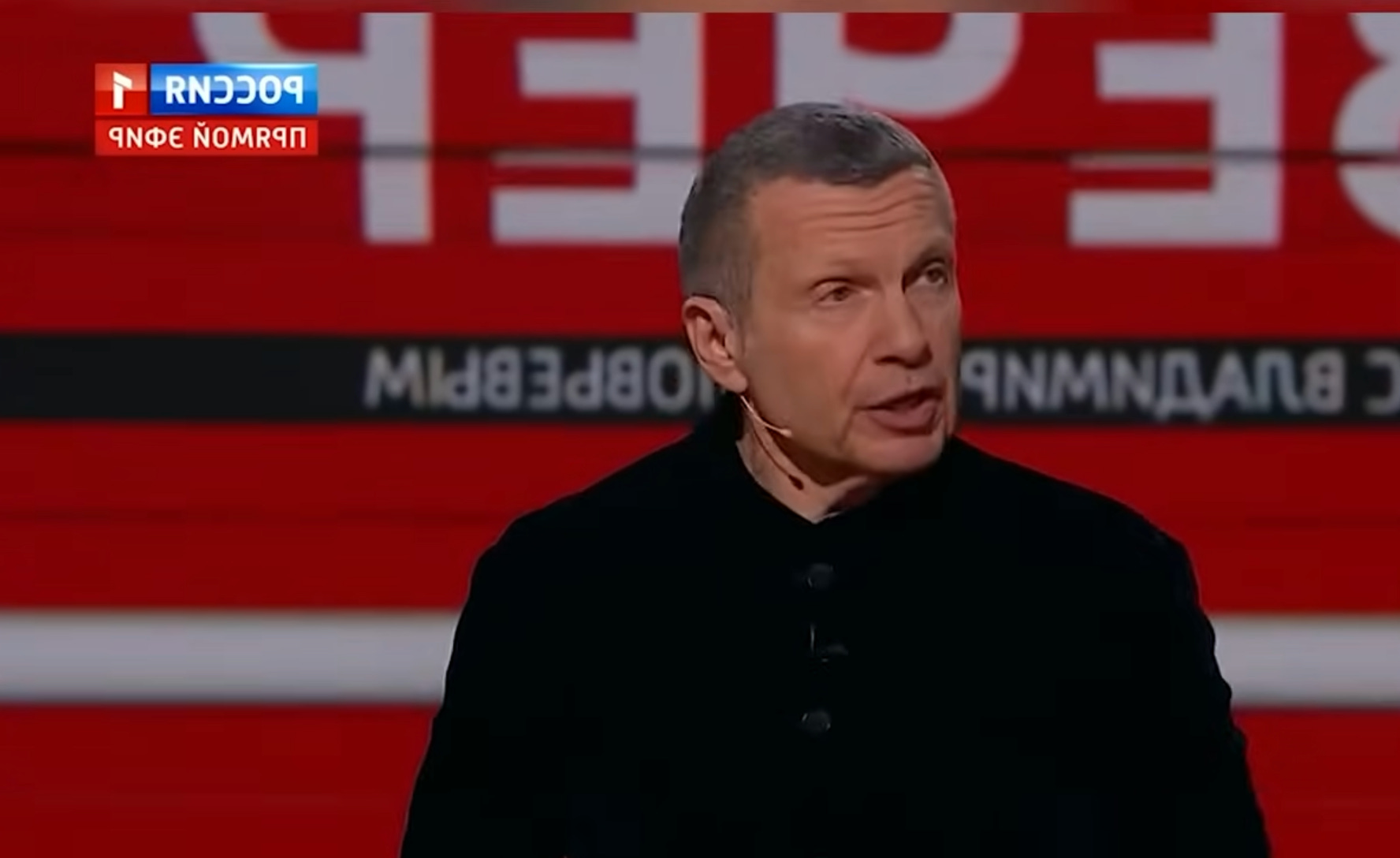
A Charismatic Enigma: My First Impressions of Vladimir Solovyov
My first exposure to Russian propagandist Vladimir Rudolfovich Solovyov was from watching a video entitled “Why I hate Russian TV” on Russian YouTuber Roman Abalin’s channel NFKRZ. Roman presented some clips of an episode of one of Solovyov’s radio shows from two years prior in which he criticizes the anti-corruption protests that occurred on March 26, 2017 in multiple cities throughout Russia and involved up to 100,000 protesters. The protests were largely sparked by investigations conducted by the late Alexei Navalny and his Anti-Corruption Foundation (FBK), which released a documentary titled “He Is Not Dimon to You.”
Solovyov presented his criticism of the protesters in a relatively calm yet sardonic manner. His criticism and condemnation of them amounted to nothing more than a mix of ad hominem, redirection and projection, referring to the participants as “the eternal two per cent of shit,” “children of corrupt officials” and “majoritarian imbeciles.”
I don’t recall seeing Solovyov again until a few years later after the start of the current Russia-Ukraine conflict. The calm demeanor Solovyov displayed in Roman’s video was not present in the subsequent videos I saw from his TV shows. I quickly realized that Solovyov’s typical TV and radio broadcasts are characterized by a harsh and theatrical intensity, where he spares no effort in belittling critics and amplifying his own narrative. His bombastic personality and disregard for basic logic seemed to be a regular occurrence on his shows, but after viewing several more clips I began to notice a very different aspect of his persona. I started to see hints that his understanding of the world is much broader than I’d previously thought. He not only displays a strong familiarity with Russian writers, philosophers and other intelligentsia, but also a deep understanding of Western economic and political thought along with substantial familiarity with modern Western culture, particularly that of the US.
This dichotomous nature of Solovyov has proven to be both perplexing and fascinating to me, forming a complex figure whose traits often seem contradictory. On one hand, he often embodies what many Westerners would view as an archetype of an ignorant nationalist, characterized by simplistic and aggressive rhetoric aimed at promoting Russia’s dominance and denigrating perceived enemies. On the other hand, he frequently reveals a level of social sophistication and intellectual depth that sets him apart from more conventional propagandists.
His hotheaded vitriol is not limited to the West and Ukrainians. Employees and guests on his shows also receive the brunt of his many outbursts. On numerous occasions he’s had guests aggressively escorted off the show for expressing views contrary to his. In one such instance, one of his show’s video technicians failed to cue up a video of Russian Foreign Minister Sergey Lavrov quickly enough. His diatribe was brutal and lingered:
My fascination with the enigma of Solovyov eventually led me to delve more deeply into his background. As I explored his past, I began to discover some surprising details about his life, from his high level of education to his extensive exposure to Western culture, expressions of his earlier liberal perspectives on free media and his past critiques of the Kremlin. I would soon learn that he spent about two years in the US in the early 90s, a number of months in the Philippines in the late 90s and lived part time in Italy for about twenty years, where he had purchased up to four large villas over the years. One might expect that his extensive exposure to and immersion in other cultures would preclude such an unbridled level of jingoism. Yet beneath the bombastic broadcasts and regular calls for attacks on the West, I have come to view Solovyov as one of the most impressive, capable and intriguing figures of recent decades. His survival skills and situational adaptability are virtually unmatched in modern history.
Solovyov was born at the tail end of the baby-boomer era on October 20, 1963 to his mother Solomonovna Solovyova (née Shapiro) and father, Rudolf Naumovich Solovyov. His father was born with the surname Vinitskovsky but changed it in 1962 to Solovyov, a name derived from the Russian word for nightingale (Portrait of Vladimir Solovyov in Evocation). Like his mother’s maiden name Shapiro, Vinitskovsky is also of Jewish origin. Although I haven’t been able to determine when his parents were married, I suspect that it was shortly after or around the same time as his father’s name change. During the Soviet era, it was not uncommon for individuals with Jewish-sounding surnames to adopt Russian-sounding names to avoid discrimination and social stigma. (Using the feminine form for his mother’s last name, Solovyova, is a standard practice in Eastern and Western Slavic languages.)
An Elite Education from Secondary through Graduate School
Solovyov’s ability to serve as an interpreter for the Soviet delegation can be traced back to his days attending secondary school, Moscow State School No. 27, a prestigious secondary school known for its focus on preparing students for international relations, diplomacy and foreign languages, particularly English. Most students in the school were the children of diplomats and Moscow’s elite. Solovyov’s first year of his secondary education was at a less prestigious school, Moscow State School No. 720, a less specialized school that provided a more typical Soviet educational experience. His move to the more prestigious school was likely enabled by his parents’ reputation as respected educators. They were both teachers who initially worked in general education. His father later specialized in economics, while his mother taught at the elementary level. Their dedication to education and extensive experience in teaching earned them recognition in their respective fields.
Solovyov pursued his undergraduate education at the the Moscow Institute of Steel and Alloys (MISiS), one of the leading technical universities in the country, renowned for its programs in materials science, metallurgy, physics and engineering. He majored in two of the more difficult subjects in academia: physics and chemistry. These fields instilled a logical and methodical mindset, which has undoubtedly bolstered the success in his media endeavors. Although his propaganda is marked by logical fallacies and boisterous hyperbole, he’s likely cognizant of these calculated missteps in logic and exaggeration. Upon completing his undergraduate studies, Solovyov then pursued graduate studies at the Institute of World Economy and International Relations of the USSR Academy of Sciences, where he earned his Candidate of Economic Sciences degree (roughly equivalent to an American PhD). In 1990. His dissertation was titled “The main trends in the production of new materials and the factors of efficiency of their use in the industry of the USA and Japan.”
While pursuing his graduate degree, Solovyov taught physics, mathematics and astronomy at his secondary alma mater School No. 27. This teaching experience provided him with the opportunity to apply his academic expertise and hone his communication abilities, skills that likely played a significant role in enhancing his effectiveness in media and propaganda later in his career. In addition to his teaching job at his alma mater, Solovyov’s resourcefulness is further demonstrated by also working as a brick layer, street cleaner and karate instructor. (He had begun pursuing karate in the ninth grade.)
An Invitation to American Academia and a Prelude to His Propagandist Trajectory
Shortly after finishing his graduate studies in early 1990, he secured a position at the Committee of the Soviet Youth Organizations (aka USSR Youth Organization Committee) as an English interpreter. This would later prove to be one of his biggest breaks in opening future opportunities and put him on a path to wealth and power. This position resulted in him serving as an interpreter for an American delegation led by John Hathaway, a wealthy real estate businessman and Republican donor. Solovyov made quite an impression on Hathaway, who ended up facilitating a visiting scholar assignment at the University of Alabama in Huntsville (UAH) for what was a six-month contract.

Solovyov’s time in the US would put him on a path to achieving wealth, fame and power after returning to Russia. Although his time in the US would begin with a prestigious position at UAH, in some ways he would soon find himself in what he felt was a humiliating set of circumstances. His second wife Yulia was with him for the duration of his stay and she ended up giving birth to their daughter Ekaterina around the time of his contract expiration. The added responsibilities of his family’s presence with him would compound his financial struggles. However, he was willing to face this challenge with humility and a strong sense of duty. He would do whatever it would take to provide for his family and continue his stay until he could make the most of his journey and launch an American dream of sorts, albeit in Russia instead of the US.
Surprisingly, his initial dive into politics and political commentary would begin in the US. Prior to returning home, he would end up participating in GOP politics and develop an obsession with listening to a certain conservative radio host who was just ramping up his career at the time.
If you found this investigation insightful, please click the heart icon at the top or bottom of this email or leave a comment. It helps others discover the series.
Great read. This is a fascinating opening because it shows how complicated public figures can be. The contrast between Solovyov’s education, global exposure, and intellectual depth versus the theatrical aggression of his broadcasts raises important questions about how propaganda is constructed.
The background you provide suggests someone highly aware of the narratives he deploys rather than merely reacting emotionally.
That tension between sophistication and performance makes the trajectory especially intriguing and sets up a compelling foundation for the rest of the series.